


Aqua Treadmill: Complete Guide (2026)
Water workouts have a reputation problem. There's a common assumption that anything done in a pool is automatically gentler, easier, less real, than training on land. An aqua treadmill challenges that assumption directly, and the research backs it up. Here's how it actually works, how it differs from simply walking laps in a pool, whether it's genuinely intense enough to matter, and who benefits most from one.
How an Aqua Treadmill Actually Works
An aqua treadmill, also called an underwater treadmill, is a non-motorized treadmill unit submerged in a pool. Like a curved treadmill on land, it's entirely self-powered, there's no motor driving the belt, your own movement does that. Two forces work together to create the training effect: buoyancy from the water reduces your effective body weight, taking load off your joints, while water resistance, which increases the faster you move, provides the actual workout intensity.
Aqua Treadmill vs. Just Walking in a Pool
This is a distinction most people miss, and it's the reason an aqua treadmill isn't just a fancier way to pool-walk. When you walk across a standard pool floor, the ground is stationary, so your heel strike only really engages the front of your leg through each stride. On an aqua treadmill, the belt itself moves beneath you, which means your leg has to actively work through both the forward and backward phase of each stride, engaging the muscles on the front and back of your leg in a way plain pool walking simply doesn't.
Aqua Treadmill vs. Land Treadmill: Quick Comparison
Factor | Aqua Treadmill | Land Treadmill |
Joint impact | Significantly reduced due to buoyancy | Full body weight impact, even with cushioning |
Power source | Self-powered, no motor | Motorized (or self-powered on curved models) |
Resistance source | Water drag, increases with speed | Belt speed and incline |
Intensity ceiling | High with resistance jets, more modest on basic home units | High, easily adjustable via speed and incline |
Best suited for | Rehab, joint-friendly training, balance work | General cardio, running-specific training |
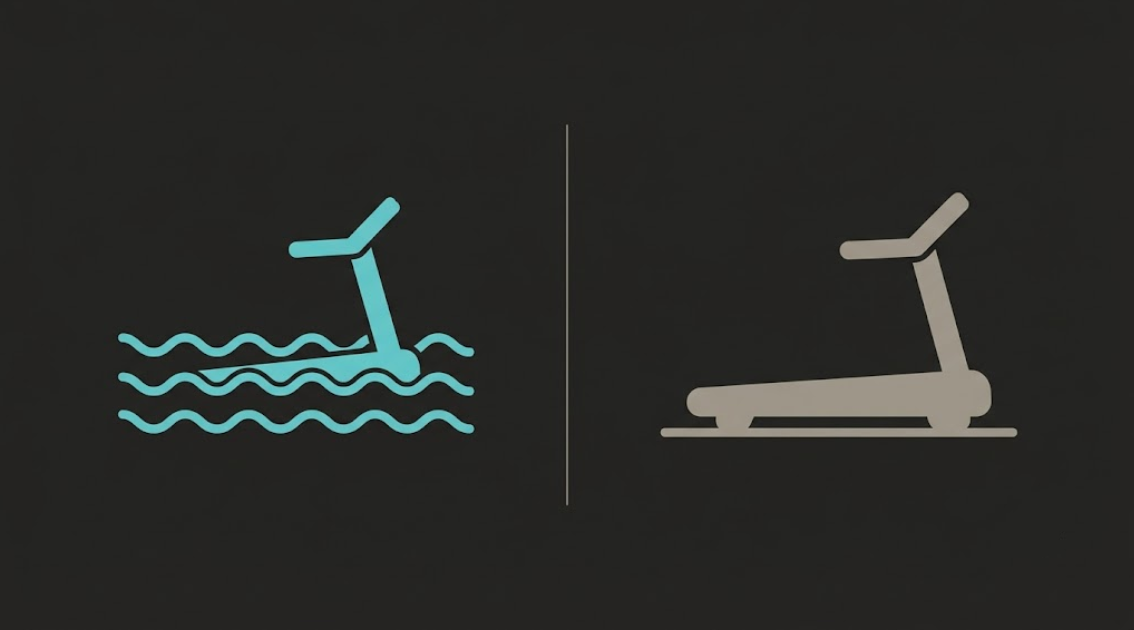
Is an Aqua Treadmill Workout Actually Intense Enough
This is the question most people ask, understandably, since water workouts have a reputation for being the "easy" option. A study out of Utah State University compared the metabolic cost of running on an underwater treadmill equipped with resistance jets against running on a land treadmill with incline. The finding: with sufficient water jet resistance, the underwater treadmill matched, and in some conditions outperformed, the oxygen consumption and heart rate response of land-based incline training.
In other words, the intensity is genuinely adjustable and can be pushed as hard as a land session when the equipment and resistance level support it. The limiting factor isn't the water, it's whether the specific unit you're using has enough resistance capability, home consumer units are gentler by design, while professional clinical systems with resistance jets can go considerably harder.
Who Actually Benefits From Aqua Treadmill Training
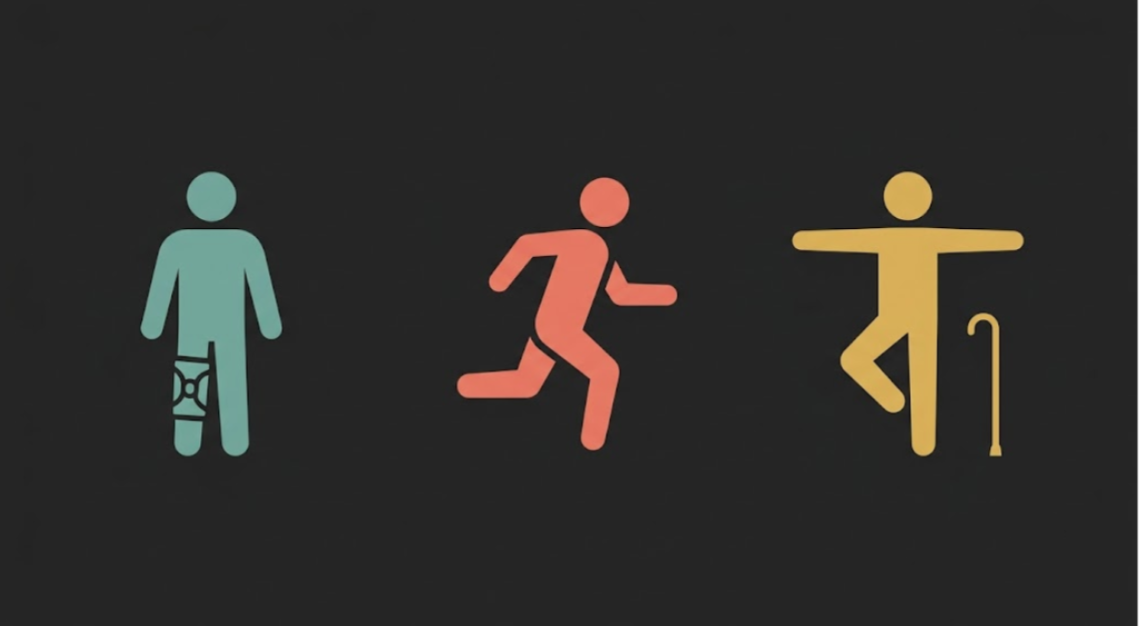
Post-surgical and orthopedic rehab patients: reduced weight-bearing load allows earlier, safer movement after knee, hip, or joint surgery than land-based training would permit.
Neurological gait and balance training: the buoyancy and controlled environment offer a safer setting for stroke survivors and others relearning walking patterns.
People managing obesity or limited load tolerance: intensive cardiovascular training becomes accessible without the joint stress that would otherwise limit exercise capacity.
Athletes maintaining fitness around an injury: allows continued cardiovascular conditioning while an injury heals, without the impact that would aggravate it.
Anyone wanting genuinely low-impact cardio: even without a specific injury or condition, the reduced joint stress makes this a comfortable option for longer training sessions.
Warm water used in most aquatic therapy settings adds a further benefit worth mentioning, it increases the elasticity of muscles and connective tissue, which tends to improve range of motion during a session compared to training at normal air temperature. This is part of why aquatic treadmill training shows up so often in post-surgical protocols specifically, patients can move through a fuller range of motion sooner than they typically could on land.
Aqua Treadmill vs. Anti-Gravity Treadmill: What's Actually Different
Both reduce the effective load on your joints, but through entirely different mechanisms. An anti-gravity treadmill uses a pressurized air chamber around your lower body to lift a precise percentage of your body weight, it's a motorized, air-based system typically found in physiotherapy clinics. An aqua treadmill uses water buoyancy and resistance instead, non-motorized, and available across a much wider range, from home pool attachments to professional clinical setups. Both serve similar rehab and low-impact training goals, the right choice usually comes down to what's actually accessible to you rather than one being definitively better than the other.
Where to Find or Access One
Aqua treadmills span a wider accessibility range than most specialized rehab equipment. On the consumer end, standalone units exist that fit into an existing home pool, an above-ground or in-ground pool with enough depth can accommodate one without major installation work. On the clinical end, physiotherapy clinics and sports rehab centers with dedicated aquatic therapy pools offer professional-grade systems with adjustable resistance jets and supervised sessions, this is the more realistic access point for most people, particularly for genuine rehab purposes rather than general fitness.
If you're exploring this for a specific injury or medical condition, the right first step is asking your physiotherapist or doctor whether aquatic treadmill therapy is appropriate for your situation and where locally offers it.
What Does an Aqua Treadmill Cost
Pricing spans a genuinely wide range depending on which end of the spectrum you're looking at. Basic consumer units designed to sit inside an existing home pool are the most affordable option, priced well below most other rehab-adjacent equipment since they require no motor or complex installation. Professional clinical systems with adjustable resistance jets and integrated display consoles, the kind found in physiotherapy and sports rehab centers, cost considerably more and are generally purchased by facilities rather than individuals.
For most people researching this for a specific rehab need, the realistic path isn't buying a unit at all, it's accessing one through a physiotherapy clinic or sports medicine center that already has one installed, paying per session as part of a supervised recovery program rather than owning the equipment yourself.
Conclusion
An aqua treadmill isn't a watered-down substitute for real training, it's a genuinely effective, low-impact tool that can match land-based intensity when the resistance is dialed up appropriately. Whether you're managing an injury, working through rehab, or just want a joint-friendly way to train hard, it's worth taking seriously rather than dismissing as the easy option. If a specific injury or condition is behind your interest, loop in a physiotherapist or doctor to confirm it's the right fit and to find where locally offers supervised access.


