


Cardio Workout Gym: Complete Plan for 2026
You've probably seen it, someone wandering from the treadmill to the bike to the elliptical, spending ten unfocused minutes on each, then leaving without really knowing if any of it worked. Access to every cardio machine in the building doesn't help much without a plan for what to actually do on them.
This guide is the gym-specific deep dive on cardio workout gym training, also called aerobic exercise or an aerobic gym workout, which machines to prioritize, how hard to actually push, and a structured session you can follow instead of drifting between equipment. If you want the broader picture of how cardio fits against strength training for weight loss generally, this weight loss exercise guide covers that ground; this page goes specifically into the gym cardio side of it.
Best Cardio Machines at the Gym for Weight Loss
Machine | Best For | Joint Impact |
Versatile, jog, sprint, or incline walk | Moderate to high, depending on pace | |
Elliptical | Full-body motion, low-impact alternative to running | Low |
Rowing machine | Full-body, builds muscle alongside cardio | Low |
Stationary bike | Strong cardio with minimal joint stress | Low |
Stair climber | High calorie burn, targets legs and glutes hard | Moderate |
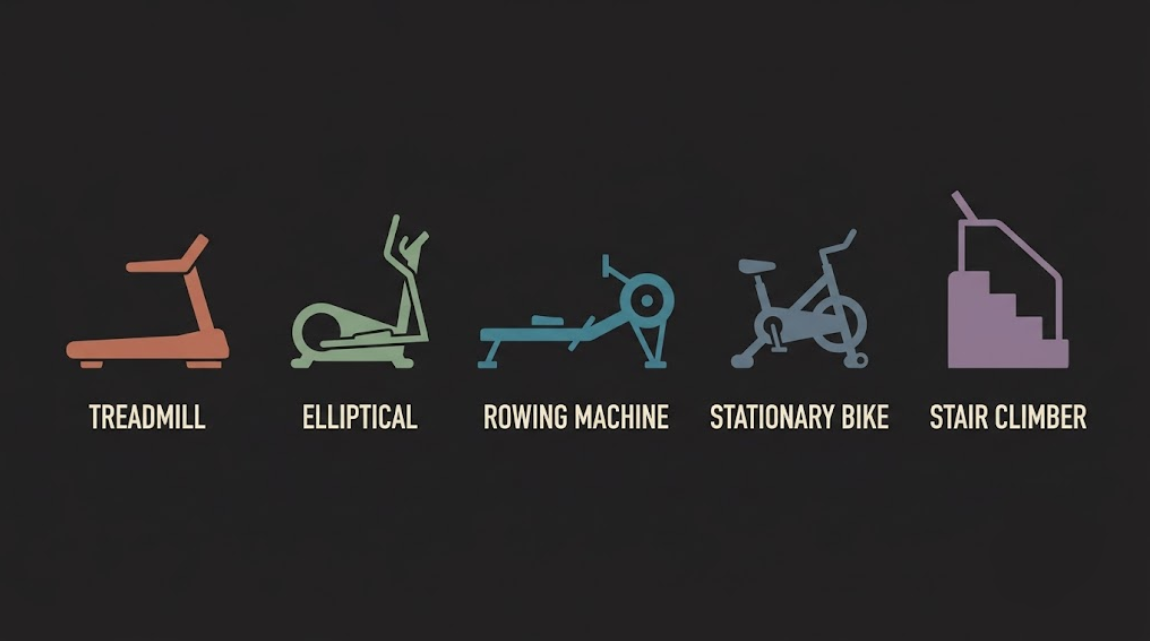
No single machine is objectively best, each one burns calories effectively when used with real intensity. The right pick depends on your joints, your preferences, and what you'll actually stick with, the best cardio exercise for weight loss is the one you'll do consistently, not the one that ranks highest on a list.
How Hard Should You Actually Push: Heart Rate Zones Explained
Intensity matters more than which machine you're on. For most fat-loss-focused cardio, aim to work at roughly 70 to 80 percent of your estimated maximum heart rate, a rough estimate is 220 minus your age, then take 70 to 80 percent of that number. At this intensity, you should be breathing hard but still able to speak in short sentences, not gasping and not casually chatting.
Many gym cardio machines have a built-in heart rate monitor, or you can check your pulse periodically if not. Staying in this zone consistently matters more than which specific machine gets you there.
The Complete Gym Cardio Workout
A structured cardio gym workout beats aimlessly rotating between machines. Here's a session you can follow as-is.
Segment | Duration | What to Do |
Warm-up | 5 minutes | Easy pace on any machine, gradually raising your heart rate |
Main work | 20 to 25 minutes | Steady pace at 70 to 80% max heart rate, or intervals (see below) |
Cool-down | 5 minutes | Easy pace, gradually lowering your heart rate before stopping |
Steady-State vs. Interval Cardio at the Gym
Steady-state cardio means holding a consistent pace and intensity for the full session, straightforward and easy to sustain. Interval training alternates between harder and easier efforts, for example, one minute at high intensity followed by two minutes of recovery, repeated for 20 minutes. Intervals tend to burn more calories in less time and create a stronger afterburn effect, while steady-state is easier to sustain for longer and gentler on recovery.
Cardio exercise in gym for weight loss works well with either approach, alternating between the two across the week keeps things varied and avoids the plateau that comes from doing the exact same session every time.
How Often Should You Do Cardio at the Gym
Three to five sessions a week is a solid range for most people focused on weight loss, adjusted based on how your strength training schedule looks. If you're also lifting, pairing cardio on separate days or after a strength session works better than doing both at full intensity back to back.
Cardio alone has limits too, nutrition typically drives more of the weight loss result than exercise does. If you haven't already, this guide to losing weight the right way covers the nutrition side that makes cardio actually pay off.
Cardio for Belly Fat: Setting Realistic Expectations
A common hope is that enough gym cardio workout sessions will specifically target belly fat. That's not how fat loss actually works, your body decides where fat comes off first based on genetics, not which machine you're using or which muscles you're working. Cardio contributes to overall fat loss, which eventually includes the midsection, but there's no way to direct it there specifically. If core strength and appearance are a specific goal alongside general fat loss, this belly fat workout guide is worth pairing with your cardio routine.
Conclusion
A good gym cardio workout comes down to structure and intensity more than which machine you happen to prefer. Pick equipment that's easy on your joints and that you'll actually use consistently, stay in the right heart rate zone, and mix steady-state with intervals to keep progress moving. Three to five sessions a week, done with real intensity, will get you further than daily unfocused wandering between machines ever will.
If you're looking for a gym with the cardio equipment and space to actually run this kind of session, browse gyms near you to see what's available in your city.

