


Gym Workout: Complete Plan for 2026
Walk into almost any gym for the first time and you'll see the same thing happen. Someone wanders between machines, does a few sets of whatever looks familiar, and leaves forty minutes later without much of a plan. It's not a lack of effort. It's that nobody told them the real first question isn't which exercises to do, it's what they're actually training for.
A gym workout only works as well as the goal behind it. Someone chasing muscle gain, someone trying to lose fat, and someone just trying to build a consistent habit all need a different starting point, even if a lot of the exercises overlap. This guide helps you figure out which one you actually need, and gives you a solid general-purpose routine to start with today if you just want to get moving.
What Kind of Gym Workout Do You Actually Need
Before picking exercises, it helps to be honest about what you're actually chasing. Here's the quick version.
Training for size and strength: if muscle gain is the main goal, a plan built specifically around progressive overload and muscle-group frequency will get you there faster than a generic routine. This muscle-gain workout plan goes into that in full detail.
Training with no equipment: if you don't have gym access right now, or you're supplementing gym days with home sessions, this no-equipment home workout guide covers a full bodyweight approach.
Training your core specifically: if abs and core strength are the actual focus rather than a side effect of general training, this ab-focused gym routine is built around exactly that.
Just want a solid starting point: if none of the above quite fits and you just want a sensible plan to follow this week, the routine below is built for that.
A General-Purpose Gym Workout Plan for the Week
This is a balanced structure for someone who wants to train seriously without over-engineering it. It works whether your main goal is general fitness, a bit of muscle, or just building the habit of showing up.
The 7-Day Structure at a Glance
Day | Focus | Notes |
Monday | Push (chest, shoulders, triceps) | Start the week with your highest energy on the biggest pressing movements |
Tuesday | Pull (back, biceps) | Rows and pulldowns balance out Monday's pressing volume |
Wednesday | Legs | Squats, lunges, and hamstring work, don't skip this one |
Thursday | Rest or light cardio | Walking, cycling, or a short easy session, not another hard lift |
Friday | Push (chest, shoulders, triceps) | Second push session of the week, slightly lower volume than Monday |
Saturday | Pull (back, biceps) + core | Add 10 to 15 minutes of direct core work at the end |
Sunday | Full rest | Complete rest day, this is where the actual adaptation happens |
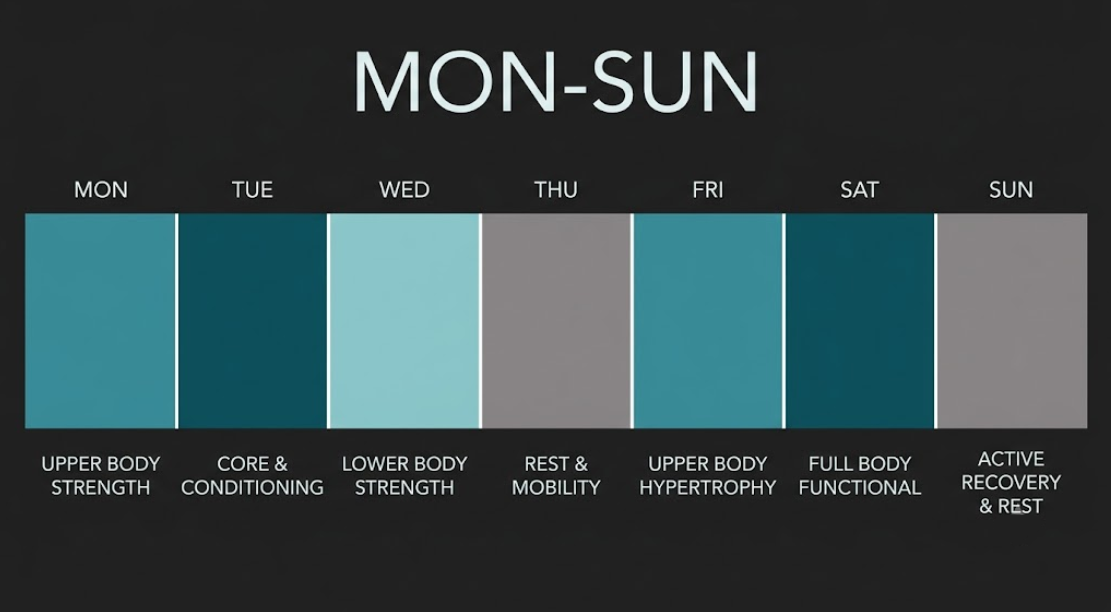
This is a push/pull/legs structure repeated across the week with one full rest day. If you're newer to training, three days a week (Monday, Wednesday, Friday as full-body sessions) works just as well and is easier to recover from while you build the habit.
How Many Sets and Reps Should You Actually Do
For most goals, 3 to 4 sets per exercise in the 6 to 12 rep range covers strength and size well. Leave 1 to 2 reps in reserve on most working sets, meaning you stop just short of failure, and save true failure for the last set of an exercise only. Isolation moves like curls or lateral raises can run a bit higher, 12 to 15 reps, without losing effectiveness.
Rest 60 to 90 seconds between isolation exercises and 2 to 3 minutes between heavy compound lifts like squats or bench press, since those need more recovery to keep quality high across sets.
What Makes a Workout Plan Good vs. Just Busy
Plenty of plans keep you sweating without actually moving you forward. A genuinely good plan has three things going for it.
Progressive overload: you're tracking weight, reps, or sets somewhere, even just a notes app, and trying to beat your last session in some small way.
Recovery built in: rest days aren't an afterthought, they're scheduled the same way training days are.
Specificity to your goal: a plan built for muscle gain looks different from one built for fat loss or general conditioning. If your routine doesn't match what you're actually trying to achieve, it's just busywork with a schedule attached.
Common Mistakes That Undo a Good Gym Workout
No progression tracking: doing the same weight for the same reps month after month feels productive but doesn't actually build anything new.
Ignoring recovery: training hard every single day without rest usually shows up as stalled progress or nagging soreness within a few weeks, not extra results.
Copying someone else's plan wholesale: a routine built for a five-year lifter rarely fits someone three months into training, and vice versa. Borrow the structure, adjust the intensity to where you actually are.
When a Plan on a Page Isn't Enough
A written plan gets most people most of the way there, but it has limits. If you're unsure about form on the bigger lifts, dealing with a nagging injury, or just want someone adjusting your program as you progress instead of guessing on your own, that's a reasonable point to bring in actual coaching rather than keep troubleshooting from an article.
If that sounds useful, it's worth taking a look at gyms near you to see what's available before you commit to training solo indefinitely.
Conclusion
The best gym workout isn't the one with the fanciest exercises, it's the one that actually matches what you're training for and that you can stick to long enough to see results. Figure out your goal first, whether that's muscle gain, training without equipment, core-specific work, or just a general routine to build the habit, and let that decide your plan rather than picking exercises at random.
Start with the weekly structure above if you need a place to begin today, and once you know your goal a little better, the more specific plans linked throughout this guide will take you further than a one-size-fits-all routine ever could.

