


Is Treadmill Bad for Knees? Here's What You Need to Know
No, a treadmill is not inherently bad for your knees. In most cases, it's actually gentler than running on pavement, since the belt is flat, cushioned, and free of the uneven ground and obstacles you'd deal with outdoors. Running itself is a high-impact activity regardless of surface, but the treadmill isn't the villain it's often made out to be.
Why Treadmills Get a Bad Reputation
Part of it is just perception. Treadmill running feels different from running outside, the moving belt, the fixed pace, the indoor environment, and when something feels different, it's easy to assume it must be worse for you. But biomechanical research comparing treadmill and outdoor running has consistently found that joint angles and movement patterns at the hip, knee, and ankle stay largely the same between the two when speed is matched. Your body isn't moving in some fundamentally riskier way just because you're indoors on a belt.
What Actually Affects Knee Strain on a Treadmill
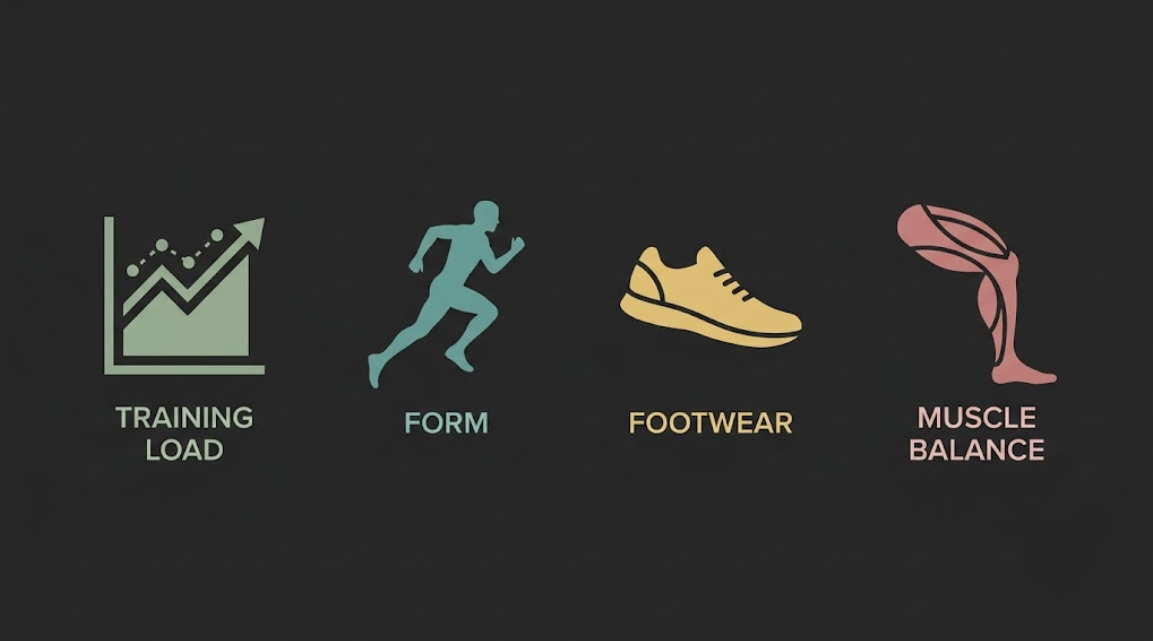
The surface itself is rarely the main issue. What actually matters is training load, running form, footwear, and whether you're gradually building up intensity or jumping in too hard too fast.
Training load: increasing your running distance or speed too quickly, regardless of treadmill or outdoors, is one of the most common causes of knee pain in runners.
Form: overstriding, landing heavily with your foot too far in front of your body, adds unnecessary impact through the knee. Shorter, quicker strides tend to be easier on the joints.
Footwear: worn-out shoes or ones that don't suit your gait can shift extra stress onto your knees over time.
Muscle imbalances: weak hamstrings or glutes often lead to the quads overcompensating, which can affect knee tracking and contribute to pain over time.
Does Incline Matter
Running at 0% incline on a treadmill isn't quite the same as running on flat outdoor ground, the moving belt slightly changes the mechanics. Some orthopedic specialists recommend a small incline, around 3%, to more closely replicate natural outdoor running mechanics and reduce strain. Running at steep inclines for extended periods, on the other hand, can contribute to patellofemoral pain, commonly known as runner's knee, so moderate is the better target.
If You Already Have Knee Pain or Osteoarthritis
If you're dealing with existing knee pain or a diagnosed condition like osteoarthritis, general reassurance about treadmills isn't really the point, your situation is individual. Orthopedic and rheumatology guidelines generally support low-impact aerobic exercise and strength training as part of managing knee pain, but the right approach depends on your specific condition and severity.
Lower-impact alternatives are worth considering if running, even on a treadmill, consistently triggers pain. An anti-gravity treadmill reduces impact by supporting a portion of your body weight while you move, which can be a useful option for building back up after injury or managing a chronic joint condition. If pain persists or worsens, that's a signal to see a doctor or physiotherapist rather than trying to push through or self-diagnose from an article.
Practical Tips to Protect Your Knees on a Treadmill
Set a slight incline, around 2 to 3%, rather than running fully flat.
Replace running shoes every 500 to 800 kilometers or so, worn cushioning loses its shock absorption.
Increase your speed or distance gradually, no more than about 10% per week, rather than jumping to a much harder session.
Mix in strength training for your hamstrings and glutes to reduce overreliance on your quads.
Alternate running with walking intervals if you're returning from a break or easing into a new routine.
Conclusion
A treadmill itself isn't bad for your knees, and for a lot of people it's actually a gentler option than pavement. What matters more is training load, form, footwear, and listening to your body when something feels off. If you're managing an existing knee condition or dealing with pain that isn't improving, that's worth a conversation with a doctor or physiotherapist rather than guesswork.
If you're looking for a gym with good quality treadmills and space to train comfortably, browse gyms near you to see what's available in your city.


