


Stretching Routine After Workout: Complete Plan for 2026
Most people either skip stretching entirely after a workout or do a random handful of stretches that don't really match what they just trained. A genuinely useful stretching routine after a workout isn't random; it's matched to the specific muscles you just worked, held long enough to actually do something, and realistic about what it will and won't do for you.
Why Stretch After a Workout
Post-workout stretching restores range of motion in muscles that just went through repeated contraction, helps them return to their resting length, and activates your parasympathetic nervous system, the part responsible for calming your body down after exercise, which lowers your heart rate and promotes genuine relaxation. Done consistently, it also improves your long-term flexibility and joint mobility and helps you maintain the range of motion you need for exercises like deep squats or overhead presses.
Worth knowing upfront: research on whether stretching actually reduces next-day soreness is mixed; several reviews have found static stretching after a workout doesn't meaningfully speed up recovery from delayed-onset muscle soreness the way it's often marketed to. That doesn't make stretching pointless; the flexibility, relaxation, and range-of-motion benefits are real and well supported. It just means don't expect a stretch session to erase tomorrow's soreness on its own. Think of stretching as an investment in how your body moves over months and years, not a same-day fix for how sore you'll feel tomorrow.
The Routine: Match Your Stretch to What You Trained
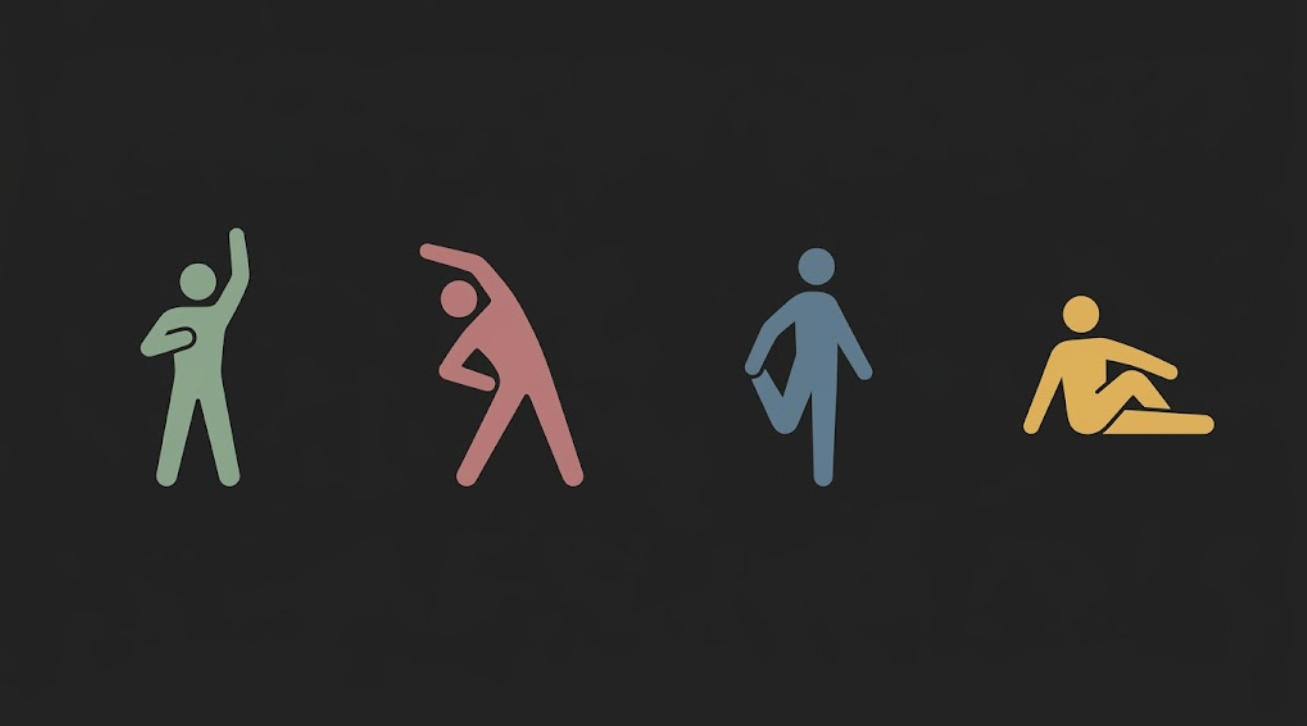
The most useful way to structure post-workout stretching is by matching stretches to the muscles you actually just worked, rather than running through a generic full-body list regardless of your session. Hold each stretch for 20 to 30 seconds, breathing steadily, without bouncing.
If You Trained Push (Chest, Shoulders, Triceps)
Stretch | How to Do It |
Chest and shoulder stretch | Clasp your hands behind your back and lift gently, opening the chest |
Overhead triceps stretch | Reach one arm overhead, bend the elbow, and ease it back gently with your other hand |
Doorway chest stretch | Place your forearm on a doorframe and gently rotate your body away from it |
If You Trained Pull (Back, Biceps)
Stretch | How to Do It |
Lat stretch | Reach one arm overhead and lean sideways at the hip, feeling the stretch down your side and lat |
Cross-body shoulder stretch | Pull one arm across your chest with the other hand, holding just below the elbow |
Biceps stretch | Extend one arm behind you at shoulder height, palm facing back, and gently rotate away |
If You Trained Legs
Stretch | How to Do It |
Standing quad stretch | Stand tall, pull one heel toward your glute, and hold, keeping knees close together |
Standing hamstring stretch | Place one heel forward, hinge at the hips, and reach toward your toes with a flat back |
Figure-four glute stretch | Lie on your back, cross one ankle over the opposite knee, and pull the thigh in toward your chest |
Calf stretch | Step one foot back, keep the heel down, and lean into a wall or support |
If You Trained Full Body
On full-body or circuit days, pick two or three stretches from each section above rather than doing all of them, covering the major areas you worked without turning your cooldown into a 20-minute session. A quad or hamstring stretch, one for the chest or lats, and a calf stretch covers most of what a full-body session demands.
If You Trained Core or Did a Cardio Session
Stretch | How to Do It |
Child's pose | Kneel and fold forward with arms extended, resting your hips back toward your heels |
Seated spinal twist | Sit with legs extended, cross one foot over the opposite knee, and gently rotate your torso toward the bent knee |
Standing side stretch | Reach one arm overhead and lean sideways at the waist, feeling the stretch along your obliques |
Core and cardio sessions don't demand as extensive a stretch routine as heavy lifting days, but a few minutes on your midsection and hips still helps, particularly after a lot of running or cycling where hip flexors tend to tighten up.
How Long and How Often
Hold time: 20 to 30 seconds per stretch is the sweet spot, shorter holds have less effect, and there's no real benefit to pushing much past 60 seconds.
Total time: aim for 5 to 10 minutes total after each workout, covering the muscles you actually trained.
Frequency: every workout is ideal for maintaining flexibility, though general guidelines suggest each major muscle group benefits from being stretched at least 2 to 3 times a week.
Getting the Technique Right
How you stretch matters almost as much as which stretches you pick. Ease into each position gradually rather than forcing it, you should feel tension in the muscle, not sharp pain, if it hurts, back off slightly. Breathe slowly and steadily throughout each hold, exhaling as you deepen into the stretch tends to help the muscle relax further. Consistency across sessions matters more than any single deep stretch, your flexibility improves gradually over weeks of regular practice, not from one unusually long hold.
Common Stretching Mistakes
Bouncing into the stretch: ballistic, bouncing movements right after training can strain already-fatigued muscles. Ease into each stretch and hold it still.
Stretching cold muscles as your only warm-up: static stretching belongs after your workout, when muscles are warm, not as your pre-workout warm-up, save dynamic movement for that instead.
Holding your breath: tensing up and holding your breath through a stretch works against the relaxation response stretching is meant to trigger. Breathe steadily throughout.
Skipping it when short on time: even 3 to 4 minutes covering your main muscle groups is better than skipping stretching entirely on a rushed day.
Conclusion
A stretching routine after workout doesn't need to be complicated or long, it needs to actually match what you trained and be held long enough to matter. Pick two or three stretches for the muscles you just worked, hold each for 20 to 30 seconds, and treat it as a genuine part of your session rather than an optional extra you skip when you're in a hurry, and if you're still looking for a place to train, you can find a gym near you and build a routine that gives you plenty to stretch out afterward.


