


Home Workout Without Equipment: Complete Plan for 2026
No gym membership, no dumbbells, no space for a squat rack, none of that actually rules out real training. What it rules out is one specific tool for getting stronger, adding external weight, and that tool has plenty of substitutes once you know what to look for.
This is a genuine home workout without equipment, built with the same progressive structure you'd expect from a gym program, along with an honest look at where bodyweight training's limits actually are and what to do once you reach them.
Can You Actually Build Muscle and Strength With No Equipment
Yes, particularly for beginners and intermediates. Push-ups produce muscle activation in the chest and triceps comparable to bench pressing at equivalent relative intensities, and bodyweight squats, lunges, and their harder variations build real quad, hamstring, and glute strength. The limitation shows up at more advanced levels, once basic bodyweight movements stop feeling challenging, you need smarter progression, not necessarily added weight, to keep making gains.
The Complete Home Workout Without Equipment
A genuine home workout no equipment routine covers your whole body across the week with just a handful of movement patterns. Aim for 3 to 4 sets per exercise, with the last 2 to 3 reps of each set feeling genuinely hard while your form stays clean, that's your bodyweight equivalent of adding weight to the bar.
Exercise | Sets x Reps | Trains |
Push-ups (or knee push-ups) | 3-4 x 8-15 | Chest, shoulders, triceps, core |
Bodyweight squats | 3-4 x 12-15 | Quads, hamstrings, glutes |
Reverse lunges | 3-4 x 10-12 per leg | Quads, glutes, balance |
Glute bridges | 3-4 x 12-15 | Glutes, hamstrings, lower back |
Plank | 3-4 x 30-45 sec hold | Core, shoulders |
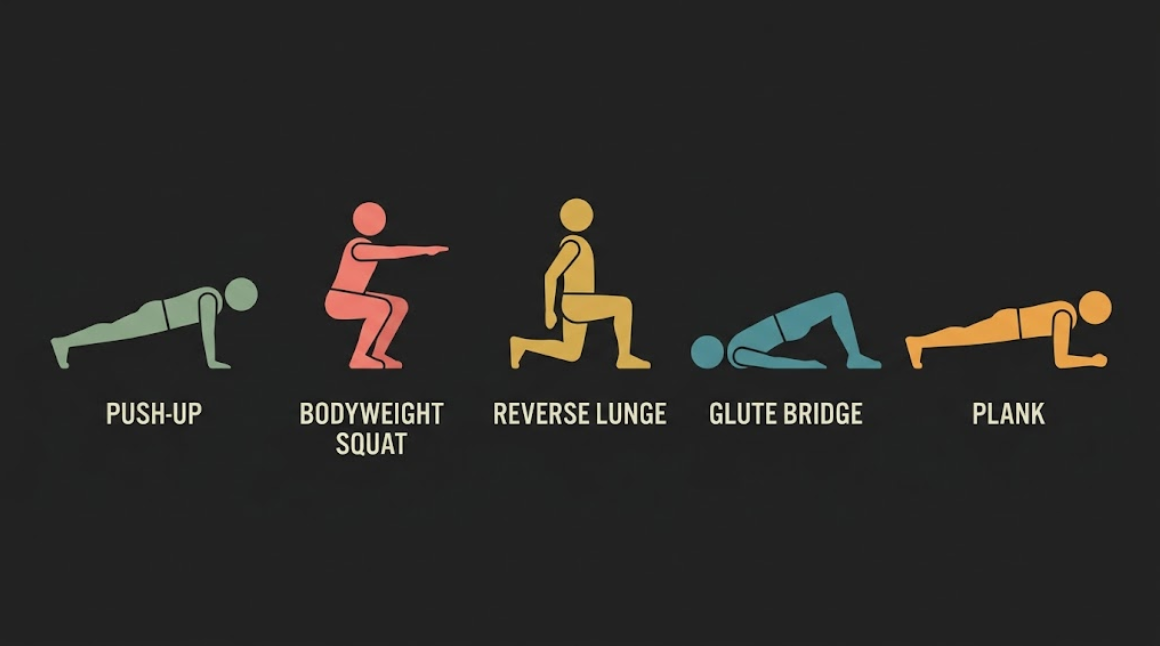
Rest 60 to 90 seconds between sets, and run this as either a straight-through routine or a circuit with minimal rest between exercises if you want to add a cardio element. Three to five sessions a week works well, and workout at home sessions cause less muscle damage than heavy barbell training, so more frequent training is genuinely realistic here compared to a heavy lifting program.
How to Progress Without Adding Weight
This is the part most home workout guides skip past. Since you can't just add plates, progression comes from three other levers instead.
Leverage: changing your body position to increase the challenge, moving from knee push-ups to standard push-ups to feet-elevated push-ups, for example.
Tempo: slowing down the lowering phase of a movement, a 3 to 4 second controlled descent on a squat or push-up meaningfully increases difficulty without changing the exercise itself.
Single-limb variations: moving from a two-legged squat to a single-leg squat, or a standard push-up to an archer push-up, concentrates the load on one side and multiplies the difficulty.
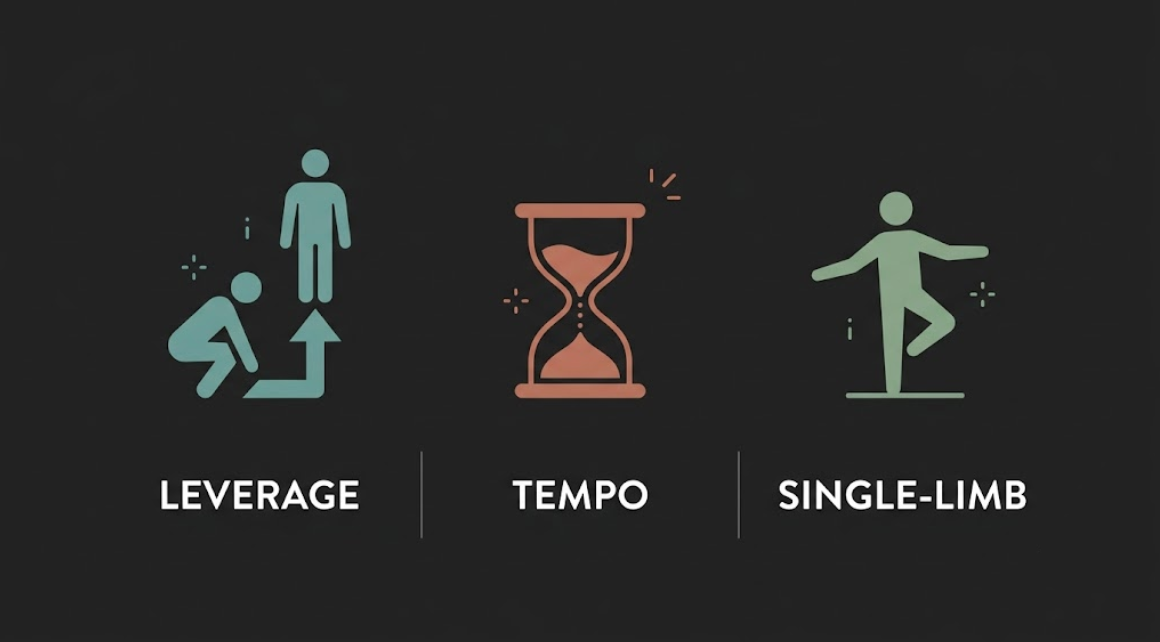
If you can complete every set with several reps to spare and clean form, that's your cue to move up one of these three levers rather than just adding more reps indefinitely.
Home Workout for Men vs. General Routines
The exercises and progression system above work identically regardless of gender. A home workout for men search usually reflects wanting a routine focused on upper body size and overall strength, which this routine already covers well. There's no separate "male" version of a push-up or a squat, the same movements and progression apply, the only real variable is how heavy you push the intensity and how you structure your week around your specific goals.
Are Home Workout Apps Worth Using
A legitimate home workout app can genuinely help, mainly through guided routines, form-check videos, and progress tracking that's easy to lose track of on paper. If you're new to training, an app that walks you through proper form for each exercise reduces the guesswork significantly. That said, an app isn't required, everything in this guide can be followed with nothing more than a phone timer and a small clear space.
When Bodyweight Training Stops Being Enough
Bodyweight training has a real ceiling, once you're comfortably doing 20+ clean push-ups or pistol squats, continuing to add reps produces diminishing returns for strength and size compared to introducing external resistance. That's a legitimate point to consider gym access rather than a sign you're doing something wrong.
If you reach that point, a full gym workout plan picks up where bodyweight training tops out. If muscle gain specifically is your main goal, this dedicated muscle gain plan goes deeper into that than a general home routine can, and if you want to keep training core strength specifically, this ab-focused routine is worth adding in either setting.
Conclusion
A home workout without equipment isn't a fallback option, it's a legitimate way to build real strength and muscle, especially in the earlier stages of a fitness journey. Progress through leverage, tempo, and single-limb variations instead of added weight, stay consistent three to five days a week, and don't be surprised if this genuinely challenges you more than you expect.
And when you do outgrow what bodyweight training alone can offer, browse gyms near you to find a space that fits the next stage of your training.


