


30-Minute Full-Body Workout Gym: Complete Plan for 2026
"I don't have time to train properly" is one of the most common reasons people skip the gym altogether, and it's based on a false assumption. You don't need an hour and a half to get a genuinely complete workout. A well-structured 30-minute full-body workout gym session, built around the right kind of exercises, covers your whole body and leaves you legitimately worked, not just warmed up. This guide gives you the exact structure, a ready-to-follow gym version, an equipment-light home version, and the reasoning behind why this format actually works, not just a list of exercises to copy.
Why 30 Minutes Is Enough If You Structure It Right
The trick isn't cramming more exercises into less time; it's choosing exercises that do more per rep. Compound movements, squats, rows, presses, and deadlifts work multiple muscle groups simultaneously, which means a single set of squats trains your quads, glutes, hamstrings, and core all at once, instead of needing separate isolation exercises for each. Pair that with short, deliberate rest periods to keep your heart rate elevated, and you get genuine strength and cardio benefits in a fraction of the time a slower, isolation-heavy routine would take.
There's a second piece to this that's easy to miss: a longer workout isn't automatically a better one. Plenty of hour-long gym sessions are padded with excessive rest, wandering between machines, and scrolling a phone between sets. A tightly structured 30-minute circuit with genuinely minimal rest can produce more actual training stimulus than a loosely paced 60-minute session; the total working time matters more than the total time spent in the building.
What to Expect From This Session
Done at genuine intensity, this circuit should leave your heart rate elevated throughout, not just during the compound lifts but through the short rest periods too, since 20 seconds isn't enough to fully recover between exercises. Expect noticeable fatigue by the second and third rounds, particularly in your grip and core, which stay engaged across nearly every exercise in the circuit. A rough estimate for calorie burn across the full session, including warm-up and cool-down, lands somewhere in the 200 to 300 calorie range depending on your weight and how much load you're using, comparable to a brisk 45-minute walk but concentrated into a third of the time.
The Complete 30-Minute Full Body Workout Gym Plan
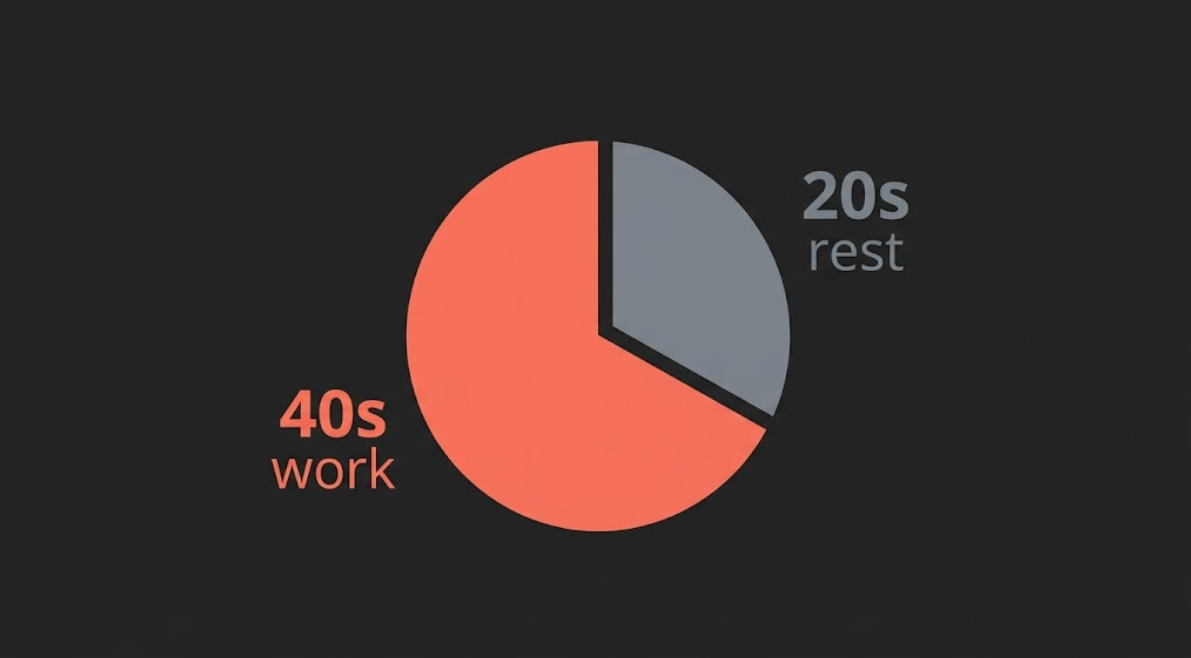
This session uses a circuit format, working through all exercises with minimal rest between them, then resting slightly longer between full rounds. Aim for 40 seconds of work followed by 20 seconds of rest per exercise, completing 3 rounds total.
Segment | Duration | Details |
Warm-up | 5 minutes | Light cardio plus dynamic movement, arm circles, bodyweight squats, high knees |
Circuit, Round 1-3 | 20-22 minutes | 6 exercises below, 40 seconds work, 20 seconds rest, 90 seconds rest between full rounds |
Cool-down | 5 minutes | Static stretching for major muscle groups worked |
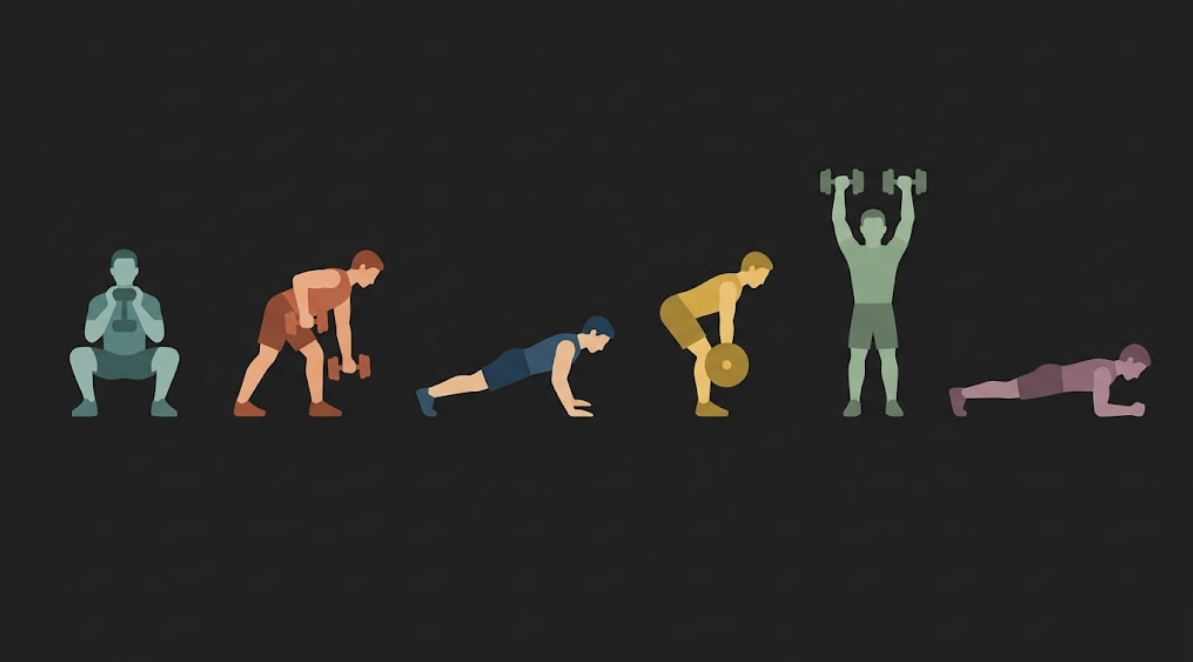
The circuit itself:
Goblet squat: dumbbell held at chest height trains legs and core.
Dumbbell row: one arm at a time or both together builds back and posture.
Push-up or dumbbell chest press: trains chest, shoulders, and triceps.
Romanian deadlift: hinges at the hips and targets hamstrings and glutes.
Overhead press: builds shoulder strength and core stability.
Plank: hold for the full 40-second work window; trains core stability.
30 Minute Full Body Workout at Home: The Equipment-Light Version
The same structure works with little to no equipment if a gym isn't accessible. Swap the goblet squat for a bodyweight squat, the dumbbell row for an inverted row using a sturdy table edge or resistance band, the chest press for standard push-ups, and the overhead press for pike push-ups or resistance band presses. The Romanian deadlift can be replaced with single-leg glute bridges, and the plank stays exactly as it is. The timing and circuit structure remain identical; only the specific exercises change based on what's available.
If even bodyweight feels too light once you've built up some conditioning, a couple of household substitutes can add resistance without needing real gym equipment; filled water bottles or a loaded backpack works reasonably well as makeshift dumbbells for the row and press variations. The goal is keeping the circuit format and timing intact; the specific load source matters far less than sticking to the structure.
Making the Most of a Short Session
Protect the rest periods: the 20-second rest is intentionally short; resist the urge to extend it just because you're tired; that's part of what makes 30 minutes effective.
Set up before you start: have your weights or space ready before the clock starts; fumbling for equipment mid-circuit eats into your limited time.
Track your rounds: use a phone timer or interval app rather than watching the clock manually; it keeps the pace honest and removes the temptation to shortcut rest periods.
Progress the load over time: as the circuit starts feeling manageable, add weight rather than more exercises; this keeps the session at 30 minutes while still increasing the training demand week to week.
A short session only stays effective if it keeps getting harder in some way, like more weight, cleaner form under fatigue, or slightly less rest as your conditioning improves. Repeating the exact same weights and pace indefinitely will plateau just as it would with any other routine.
When You Need More Than 30 Minutes
This session is genuinely complete for a time-constrained day, but it's not meant to replace a fuller training week entirely. If you have more time on other days, a full gym workout plan gives you a complete weekly structure to build around, and if muscle gain specifically is your main goal, a dedicated muscle gain plan goes deeper than a 30-minute circuit can.
Conclusion
A 30-minute full-body workout gym session isn't a compromise; it's a genuinely effective way to train when time is tight, as long as the structure is right. Compound movements, short rest periods, and a circuit format let you cover your whole body in half the time a traditional split routine would take. Use this on your busiest days, and build out to longer sessions when you have more time to work with.


