


How to Make Protein Powder at Home: A Step-by-Step Guide
Most recipes for homemade protein powder skip the one number that decides whether it's worth making: how much protein you get per scoop. A mix of roasted nuts, seeds, and chana comes out at roughly 22 grams of protein per 100 grams. Whey concentrate sits closer to 75 to 80. That gap changes how you should use the powder, which goals it suits, and whether it's the right choice for you at all.
Below is a base recipe with the protein and calorie math worked out, a method that avoids the usual failures (clumpy powder, nut butter, a jar that goes rancid in a week), straight advice on using it for weight gain versus weight loss, and a clear verdict on when buying protein powder makes more sense than making protein powder at home.
What Homemade Protein Powder Actually Is
Calling it protein powder is generous. What you're making is a ground mix of protein-rich foods, closer to a high-protein flour than the isolated protein in a store-bought tub. Every ingredient brings its own fat and carbohydrate along with the protein, and the fat is where most of the calories hide.
The comparison below shows what that means in practice. The homemade figures come from the base recipe later in this guide, calculated from standard published values for each ingredient. They're estimates, not lab results, and they'll shift a little with the brands and ratios you use.
Factor | Homemade mix | Typical whey concentrate |
Protein per 100g | About 22g | About 75-80g |
Protein per 30g serving | About 6.5g | About 24g |
Calories per 30g serving | About 150 | About 120 |
Serving needed for 20g protein | About 90g, roughly 450 calories | About 25g, roughly 100 calories |
Fibre and healthy fats | Present | Minimal |
Mixing | Gritty, works best in a blender | Dissolves in a shaker |
Shelf life | A few weeks | Months |

What Store-Bought Protein Powder Is Made From
Commercial protein powders start with a protein-rich source and strip away most of the fat and carbohydrate. Whey and casein come from milk, soy protein isolate from soybeans, and pea protein from yellow peas. That processing concentrates the protein to somewhere around 70 to 90 percent of the powder's weight. A home kitchen can't do that step, which is why a homemade mix lands near 22 percent instead.
Homemade Protein Powder Ingredients and the Base Recipe
This batch makes about 500 grams, or roughly a dozen 40-gram servings, which is small on purpose. Ground nuts and seeds go stale faster than whole ones, so a small batch you finish in a few weeks beats a big one you're still scooping from in month three. Protein per 100 grams below uses rounded standard values, so check your own packs if you want exact numbers.
Ingredient | Amount | Protein per 100g | Protein in batch | Why it's in the mix |
Roasted chana (bhuna chana) | 150g | About 21g | About 31.5g | Cheap, lower-fat base that keeps calories down |
Roasted peanuts, unsalted | 100g | About 25g | About 25g | Protein and a creamy flavour |
Almonds | 75g | About 21g | About 15.8g | Protein plus vitamin E |
Pumpkin seeds | 50g | About 30g | About 15g | The densest protein of the seeds |
Sunflower seeds | 50g | About 21g | About 10.5g | Protein and mild flavour |
Rolled oats | 50g | About 13g | About 6.5g | Carbs and fibre, helps the texture |
Flax seeds | 25g | About 18g | About 4.5g | Fibre and omega-3 fats |
Total | 500g | About 22g | About 109g |
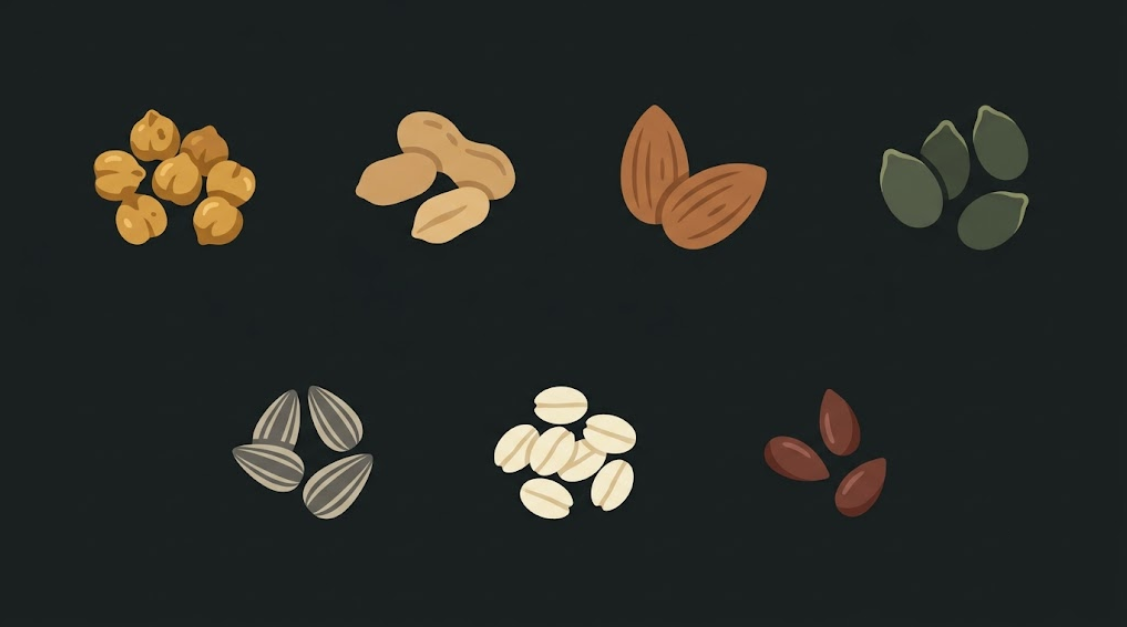
Notice what's missing. Raw soybeans, raw rajma, and other dry beans stay out of a no-cook powder entirely. They contain compounds that cause digestive illness or block protein digestion unless properly boiled, and pan-roasting doesn't reliably fix that. Roasted chana is already cooked, which is why it works here.
Milk powder shows up in a lot of recipes online. With this mix already near 22 percent protein, adding 50 grams of milk powder barely changes the concentration, so it's an optional flavour choice, not a protein upgrade.
How to Make Protein Powder at Home, Step by Step
Check your ingredients. Use unsalted, unflavoured nuts and seeds only. Masala peanuts or salted chana will ruin the powder. Smell anything that's been in the pantry for months, because rancid nuts taste bitter and a bit like old paint.
Dry roast each ingredient separately on low to medium heat. Rough times are about 4 to 5 minutes for almonds, 6 to 8 for raw peanuts, 2 to 3 for pumpkin and sunflower seeds, 3 to 4 for oats, and 1 to 2 for flax. Your pan and flame matter more than the clock, so pull each one when it smells toasty and the colour deepens slightly, before it browns. Roasted chana only needs a minute in the warm pan.
Cool everything completely. Spread it on a plate for at least 30 minutes. Grinding warm ingredients releases oil and traps steam, which gives you paste now and mould later.
Grind in short pulses. Use a dry mixer jar and run it for 10 to 15 seconds at a time, pausing so the jar doesn't heat up and shaking it between pulses. Stop when it looks like fine flour, sift it, and put the coarse bits back in for another round. If the powder feels oily or starts clumping, you've run it too long. Let it cool and finish in shorter bursts.
Add flavour last, if you want any. A pinch of cardamom or cinnamon works, so does a spoon of cocoa powder. Keep sweeteners out of the jar and add sugar, honey, or jaggery to the glass instead, since sweeteners draw in moisture and shorten shelf life.
Store it small. An airtight glass jar on a cool, dark shelf away from the stove is the right spot. As a general guide, use it within 3 to 4 weeks, and keep it in the fridge through humid monsoon months. Throw it out if it smells bitter, musty, or like old paint.
How to Prepare and Use Protein Powder at Home
This powder won't dissolve the way whey does. Shake it in a bottle and you'll end up with gritty clumps at the bottom, so blend it in a mixer instead.
A realistic shake looks like this. Blend 40 grams of the mix, about 4 to 5 tablespoons, with a glass of milk and a banana. Using the numbers above, the powder contributes about 9 grams of protein and 200 calories. A 250ml glass of milk adds roughly 8 grams of protein and around 130 calories, and the banana adds about 105 calories. The full shake comes to about 18 grams of protein and roughly 430 calories.
That's a useful number to keep in mind against your daily target. If you're aiming for 120 grams of protein a day, one shake covers 15 percent of it while taking up a fifth of a 2,000-calorie budget. Beyond shakes, the powder works stirred into oats or ragi porridge, mixed into chilla batter, or kneaded into laddoo dough with dates or jaggery.
Homemade Protein Powder for Weight Gain
Calorie density is the one place this recipe beats store-bought powder. At roughly 500 calories per 100 grams, it's an efficient way to add calories for anyone who struggles to eat enough. People often search for protein powder for women's weight gain specifically, but nothing in the recipe is gender-specific. Calorie needs depend on body size, activity level, and goals, not on who's drinking the shake.
Two of the shakes above, one mid-morning and one in the evening, add roughly 870 calories and 35 grams of protein across the day. Weight gain still comes down to eating more than you burn, and if you want that gain to be mostly muscle rather than fat, pair the extra calories with strength training. Start with one shake a day if you're not used to this much fibre and fat, since a sudden jump can upset your stomach.
Homemade Protein Powder for Weight Loss
This is the weak spot, and it's better to know that before you spend an afternoon roasting. Getting 20 grams of protein from this mix costs about 450 calories. The same 20 grams from whey costs around 100, and from egg whites roughly 95. If you're in a calorie deficit, that difference adds up fast.
Where it can still fit is as a nutrient-dense topping rather than a main protein source. One or two tablespoons over curd or oats adds about 2 to 4 grams of protein and 40 to 85 calories, along with fibre and healthy fats you'd otherwise miss.
You can also tilt the recipe toward a leaner mix. Using 250 grams of chana, 75 of oats, 50 each of peanuts and pumpkin seeds, and 25 each of almonds, flax, and sunflower seeds brings it to about 440 calories per 100 grams at roughly the same 21 percent protein. That's about 10 percent fewer calories per scoop, a real but modest improvement, not a transformation.
Making It Without Nuts
A nut-free version works if you swap the peanuts and almonds for more chana, oats, and seeds. A batch of 250 grams of chana, 100 of oats, 75 of pumpkin seeds, 50 of sunflower seeds, and 25 of flax still lands around 20 grams of protein per 100 grams. If the reason is an allergy, check that your seeds and oats are packed in a nut-free facility, since cross-contamination is common.
Safety, Allergies, and Who Should Check First
Allergens: peanuts, almonds, and seeds can all trigger reactions. Label the jar clearly if anyone else in the house eats from your kitchen.
Mould: peanuts in particular can carry mould toxins when stored damp. Buy from a seller with good turnover and discard anything that smells musty or looks discoloured.
Rancidity: ground nuts and seeds spoil faster than whole ones, which is the main reason to make small batches.
Health conditions: anyone with kidney disease, or who is pregnant or breastfeeding, should check with a doctor before adding extra protein to their routine.
Is It Worth Making at Home?
The honest call is that homemade protein powder works better as a whole-food snack mix and calorie booster than as a replacement for whey.
Make it if you want whole-food ingredients, need to add calories, avoid whey or dairy, or just like cooking from the pantry.
Buy protein powder instead if you're hitting a high protein target on a calorie budget, want a quick shake that dissolves, or need consistent protein numbers you can count on every day.
Conclusion
A homemade protein mix is mostly nuts, seeds, and chana, with decent protein and a lot of calories. That makes it a good fit for adding calories and a poor fit for cutting them. Roast in small batches, cool before grinding, and blend it into a shake instead of expecting it to dissolve. If you find you need protein more than you need calories, store-bought powder will serve you better, and if you're making the powder to support your training, find a gym near you to pair it with a strength routine that turns those extra calories into muscle.


