


Gym Diet: Complete Guide for 2026
Training hard and eating whatever's around is the single most common reason people stall out at the gym. Your workout tells your body to build muscle or burn fat. Your gym diet is what actually supplies the materials to do either one. Get the training right and the diet wrong, and you'll spend months working hard for results that never quite show up.
This guide covers what to actually eat, how much, and when, using foods that show up in a normal Indian kitchen rather than a list built around imported supplements and foreign ingredients. It also covers how to actually calculate your own numbers instead of copying someone else's meal plan built for a different bodyweight and goal.
Protein: The One Number That Matters Most
If you remember nothing else from this article, remember this. For building muscle, aim for 1.6 to 2.2 grams of protein per kilogram of bodyweight each day. A 70kg person lands somewhere between 112 and 154 grams daily. If your goal is fat loss while keeping the muscle you've already built, push that slightly higher, 2.0 to 2.4 grams per kilogram, since protein needs actually go up when calories go down.
Spread that total across 4 to 5 meals rather than trying to cram it into one or two sittings. Your body uses protein for muscle repair in chunks of roughly 20 to 35 grams at a time, not in one massive dose. A single 150-gram dinner serving of paneer won't do what three smaller 50-gram servings spread across the day will.
Carbs and Fat: Not the Enemy
Carbohydrates fuel your training sessions and refill the glycogen your muscles burn through during a workout. For muscle gain, 4 to 6 grams of carbs per kilogram of bodyweight is the standard range, rice, roti, oats, and fruit all count here. For fat loss, that drops to roughly 2 to 3 grams per kilogram, still enough to train hard, just without the surplus.
Fat sits around 0.8 to 1.2 grams per kilogram regardless of your goal. This isn't a number to cut toward zero. Dietary fat supports hormone production, including testosterone, which plays a direct role in how effectively you build muscle. Ghee, nuts, seeds, and egg yolks cover this without much effort.
Bulking vs. Cutting: How the Numbers Actually Change
Macro | Muscle Gain (Bulking) | Fat Loss (Cutting) |
Calories | Surplus of 250-500 kcal/day above maintenance | Deficit of 300-500 kcal/day below maintenance |
Protein | 1.6-2.2 g per kg bodyweight | 2.0-2.4 g per kg bodyweight |
Carbohydrates | 4-6 g per kg bodyweight | 2-3 g per kg bodyweight |
Fat | 0.8-1.2 g per kg bodyweight | 0.8 g per kg bodyweight |
Notice protein actually climbs during a cut rather than dropping. That's deliberate. A calorie deficit puts your body at genuine risk of burning muscle tissue for energy alongside fat, and higher protein intake is one of the clearest tools for preventing that.
Working Out Your Own Numbers
The ranges above only matter once you've turned them into actual grams for your bodyweight. Take a 75kg lifter aiming for muscle gain. Protein lands at 120 to 165 grams a day. Carbs land at 300 to 450 grams. Fat lands at 60 to 90 grams. Multiply those out to calories, protein and carbs at 4 calories per gram, fat at 9, and you get a daily target somewhere around 2,500 to 3,100 calories, depending on where in each range you land.
Same person cutting fat instead: protein jumps to 150-180 grams, carbs drop to 150-225 grams, fat stays close to 60 grams. Total calories fall to somewhere around 1,800 to 2,100. Run your own bodyweight through the same math rather than copying someone else's numbers, the ranges exist because body size changes the actual grams needed.
Indian Foods That Actually Cover Your Protein Target
You don't need imported powders to hit these numbers. These foods show up in most Indian kitchens already.
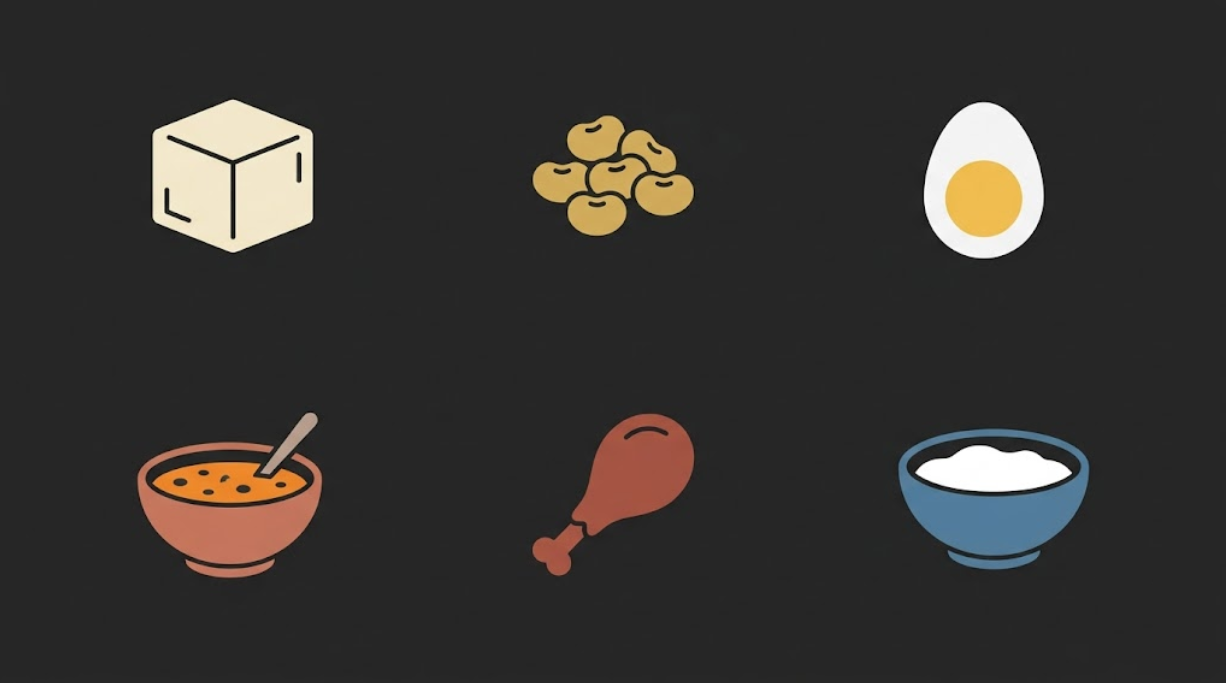
Paneer: roughly 18 grams of protein per 100 grams, widely accepted across vegetarian diets, comparable in quality to chicken.
Soya chunks: around 52 grams of protein per 100 grams dry weight, one of the densest plant protein sources available in a typical Indian grocery store.
Eggs: roughly 6 grams of protein per egg, cheap, versatile, and quick to prepare before or after a session.
Dal: 8 to 10 grams of protein per katori, modest on its own but meaningful across three meals a day.
Chicken and fish: 20 to 25 grams of protein per 100 grams cooked, the fastest way to close a protein gap for non-vegetarians.
Curd and milk: 8 grams of protein per cup, an easy addition to breakfast or a pre-bed snack.
A Day of Eating: Veg Example
Built for a 70-75kg beginner aiming for muscle gain, roughly 2,700 calories and 145 grams of protein across the day.
Breakfast: 3 moong dal chillas with a cup of low-fat curd and a banana, around 440 calories, 27 grams of protein.
Pre-workout (45-60 minutes before training): poha with curd, or sattu mixed with water and a banana, easy carbs that won't sit heavy during your session.
Post-workout: paneer bhurji with two rotis and a side of sabzi, your biggest protein hit of the day, timed when your muscles are most receptive to it.
Dinner: rajma or chana with rice, plus a bowl of curd.
Before bed (optional): a glass of milk, a small, low-effort way to add protein overnight.
A Day of Eating: Non-Veg Example
Same calorie and protein targets, built around chicken, fish, and eggs instead of soya and paneer for anyone who eats meat.
Breakfast: 3 whole eggs plus 2 egg whites, scrambled, with two slices of whole wheat toast.
Pre-workout: a banana with a small handful of almonds.
Post-workout: grilled chicken breast, around 150 grams, with rice and a vegetable side.
Dinner: fish curry with roti and a salad.
Timing: Before and After Training
Eat a meal with carbs and moderate protein 45 to 90 minutes before training. Poha with curd, idli with sambar, or sattu with a banana all work well here, easy to digest, enough carbs to fuel the session, without sitting heavy in your stomach while you lift.
After training, get a full meal with a solid protein source and carbs within roughly 90 minutes. This is when your muscles are primed to absorb the amino acids and glycogen they just burned through. Chicken or paneer with rice, dal with roti, whatever fits your diet, just don't skip this window entirely in favor of whatever's convenient three hours later.
Running a Gym Diet on a Budget
A full day hitting 120 to 130 grams of protein doesn't require an expensive shopping list. Eggs, dal, soya chunks, and seasonal vegetables cover most of it for well under ₹150 a day in most Indian cities. Paneer and chicken cost more per gram of protein than dal or eggs, worth keeping in mind if budget is tight, rotate them in a few times a week rather than every meal.
Water and the Nutrients That Don't Show Up on a Macro Chart
Protein, carbs, and fat get all the attention, but a few things outside those three numbers decide whether your gym diet actually works. Water first: even mild dehydration measurably hurts strength output and recovery, aim for at least 3 to 4 litres a day, more if you're training in Indian summer heat and sweating through a session. Iron matters too, particularly for vegetarian lifters, since plant iron absorbs less efficiently than iron from meat. Pairing iron-rich foods like dal or spinach with something containing vitamin C, a squeeze of lemon, an orange, a tomato, meaningfully improves how much your body actually absorbs.
Fiber is the other one people cut too aggressively when they start chasing protein numbers. Dropping vegetables and whole grains to make more room for chicken or paneer in your calorie budget often backfires as digestive discomfort within a week or two. Keep a serving of sabzi or a salad in most meals even while you're prioritizing protein elsewhere.
Common Mistakes That Undo a Good Gym Diet
Chasing protein and ignoring total calories: hitting 150 grams of protein in a 1,800 calorie deficit day won't build muscle if your total intake doesn't support a surplus.
Eating the same two meals on repeat: nutritional variety matters for micronutrients your body needs for recovery, not just the three headline macros.
Treating supplements as a replacement for food: a scoop of whey fills a gap in your day, it doesn't substitute for an entire missed meal's worth of calories and nutrients.
Giving up after one bad week: weight and strength fluctuate day to day. Judge your diet by the trend over three to four weeks, not any single day's number on the scale.
Adjusting the Plan as You Go
Treat your first two to three weeks on any of these numbers as a starting estimate, not a fixed prescription. Weigh yourself under the same conditions once or twice a week and track the trend, not the daily bounce. If you're meant to be gaining and the scale hasn't moved in three weeks, add 150-200 calories, usually easiest through an extra serving of rice or an additional egg or two. If you're cutting and weight loss has stalled for two weeks straight despite sticking to the plan, trim another 150-200 calories rather than cutting protein, which should stay fixed throughout.
Strength in the gym is a second useful signal. If your lifts are dropping week over week on a cut, that's often a sign the deficit is too aggressive for how much muscle you're asking your body to hold onto, not a sign to push harder through fatigue.
Conclusion
A gym diet isn't complicated once you know the actual targets: protein in the 1.6 to 2.4 gram per kilogram range depending on your goal, carbs and fat adjusted around that, and meals built from food you already know how to cook. Pick two or three protein anchors you genuinely enjoy eating, build your meals around them, and adjust portions every few weeks based on how your weight and strength are actually moving. Dialing in your diet gets you halfway there, pairing it with real training is what closes the gap, so find a gym near you if you need a place to put these numbers to work.


