


Weight Loss Exercise: Complete Guide (2026)
Search for weight loss exercise and you'll get a thousand conflicting answers. Cardio versus weights, 20 minutes versus an hour, running versus walking. Most of it misses the actual point: the best weight loss exercise is the one you'll consistently do, built on a structure that actually creates a calorie deficit over time.
This guide covers what genuinely moves the needle for fat loss, including weight loss exercise options for the gym and at home, why cardio alone usually isn't the fastest route, and a realistic weekly structure you can actually stick to.
How Exercise Actually Causes Weight Loss
Weight loss ultimately comes down to burning more calories than you consume. Exercise contributes to that equation in two ways: burning calories directly during the workout, and building muscle that raises your resting metabolic rate over time, meaning you burn slightly more even at rest. Cardio is stronger on the first mechanism, strength training is stronger on the second, which is why the most effective approach usually combines both rather than picking one.
Best Exercise for Weight Loss: Cardio, Strength, or Both
Exercise Type | Strength | Best Role |
Cardio (running, cycling, swimming) | Burns the most calories per session | Creating the calorie deficit directly |
Strength training (weights, resistance) | Builds muscle, raises resting metabolism | Protecting muscle mass while losing fat, improving long-term results |
HIIT (interval training) | High calorie burn in less time, afterburn effect | Time-efficient sessions, breaking plateaus |
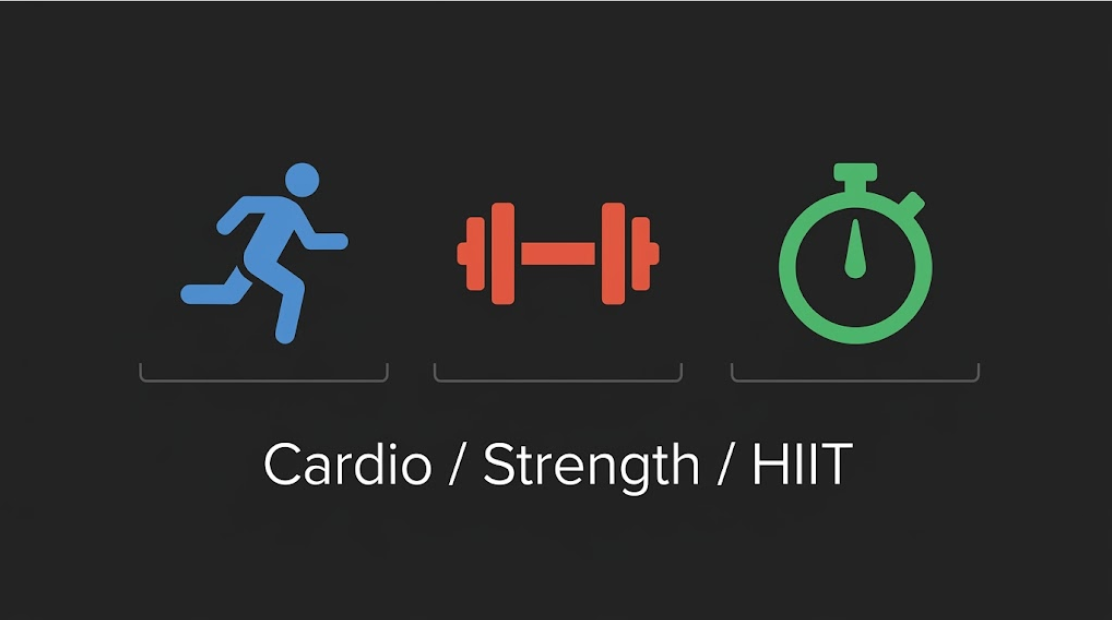
The honest answer is both, in combination, outperforms either alone. Cardio creates the deficit faster in a single session, but strength training is what keeps your metabolism from slowing down as you lose weight, which is a common reason people plateau a few months into a weight loss plan.
Cardio Exercise for Weight Loss: What Actually Works
Brisk walking or incline walking: underrated and sustainable, especially for beginners or anyone managing joint concerns.
Running or jogging: high calorie burn per minute, but higher impact on joints, build up gradually if you're new to it.
Cycling: lower impact than running while still delivering a strong cardio workout, works well on a stationary bike or outdoors.
Swimming: full-body, zero-impact, particularly useful if joint pain limits other cardio options.
Jump rope: extremely time-efficient calorie burn, works well as a short, intense finisher to a workout.
Fastest Weight Loss Exercise: Setting Realistic Expectations
People searching for the fastest weight loss exercise are usually looking for a shortcut that doesn't really exist. HIIT and circuit-style training burn the most calories per minute of any exercise type, and they also trigger an afterburn effect where your body keeps burning slightly more calories for hours after the session ends. That makes HIIT the closest thing to a genuinely time-efficient option.
But intensity alone doesn't beat consistency. A 20-minute HIIT session done once a week loses to 30 minutes of brisk walking done five days a week, simply because the walking adds up to more total calories burned across the week. The fastest realistic path to weight loss is the exercise you'll actually repeat often enough to matter.
Weight Loss Exercise for Female at Home
You don't need a gym membership or equipment to get a genuinely effective weight loss workout done at home. A simple, repeatable structure works better than an ever-changing routine you can't stick to.
Day | Focus | Example |
Day 1 | Full-body strength (bodyweight) | Squats, push-ups, lunges, glute bridges, plank |
Day 2 | Cardio | Brisk walk, jump rope intervals, or a dance-style workout |
Day 3 | Rest or light activity | Stretching, a gentle walk |
Day 4 | Full-body strength (bodyweight) | Repeat Day 1 or vary with step-ups and mountain climbers |
Day 5 | Cardio or HIIT | 20 minutes of interval work, alternating high and low intensity |
Day 6 | Active recovery | Yoga, walking, light mobility work |
Day 7 | Rest | Full rest day |
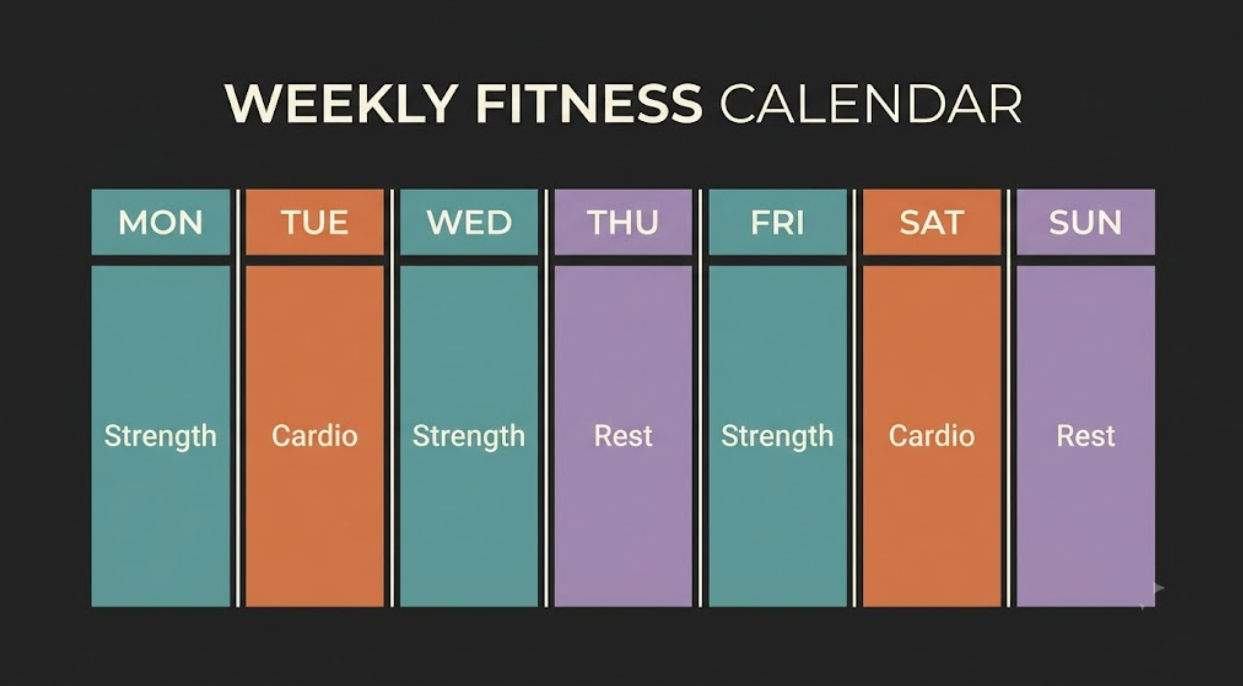
This same structure works well as exercise for weight loss at home for female readers specifically because it needs no equipment and scales with your fitness level, add reps or intensity as it starts feeling easier.
Putting Together a Weight Loss Exercise Routine
Whatever exercises you choose, a few principles make the actual difference between a routine that works and one that stalls out.
Consistency over intensity: four moderate sessions a week beats one brutal session followed by four days of nothing.
Combine cardio and strength: don't rely on cardio alone, muscle mass is what keeps your metabolism from slowing as the weight comes off.
Progress gradually: add time, reps, or intensity every couple of weeks rather than jumping straight to advanced workouts.
Track something: weight, measurements, or how your clothes fit, some form of tracking keeps you honest about what's actually working.
Exercise alone has limits too. If your nutrition isn't in a calorie deficit, even a well-built workout routine will struggle to produce results, it's worth pairing this with a genuine look at how to lose weight fast the right way, since diet typically does more of the heavy lifting than exercise alone.
Gym-Based Weight Loss Workouts
If you do have gym access, it opens up more efficient options than bodyweight training alone, particularly for cardio machines and progressive resistance training. A structured cardio workout at the gym combined with resistance training covers both mechanisms of weight loss in fewer total sessions than trying to replicate the same volume at home.
If belly fat specifically is your main concern, it's worth knowing that spot reduction, losing fat from one area through targeted exercise, isn't how fat loss actually works. A belly fat workout can strengthen your core and contribute to overall calorie burn, but where you lose fat first is determined by genetics, not which exercises you do.
Conclusion
The best weight loss exercise isn't a single move or a secret routine, it's a combination of cardio and strength training done consistently, built around a structure you can actually maintain for months, not just a few weeks. Start with the routine that fits your current access and fitness level, whether that's the at-home plan above or a gym-based approach, and let consistency do the work intensity alone can't.
If you're ready to add gym access into the mix, browse gyms near you to find a space that fits your routine and schedule.

