


Boxing vs MMA: Which Is Tougher, and Which Should You Train?
Every gym has this argument eventually. Boxing versus MMA, which one is actually tougher, which one would win in a real fight, which one you should walk in and sign up for. Most of that debate ends in opinion. The more useful version of the question actually splits into two separate ones: which sport carries more real risk, and which one is harder to learn. The answers to those aren't the same, and treating mma vs boxing as one single question is where most comparisons go wrong.
Boxing vs MMA: Which Is More Dangerous
The most cited research here comes from a ten-year study by the University of Alberta's Sather Sports Medicine Clinic, tracking fighters from 2003 to 2013. The findings cut against the common assumption.
Measure | Boxing | MMA |
Overall injury rate | 49.8% | 59.4% |
Knockout / loss of consciousness rate | 7.1% | 4.2% |
Typical injury severity | Fewer injuries, but more severe | More frequent injuries, generally less severe |
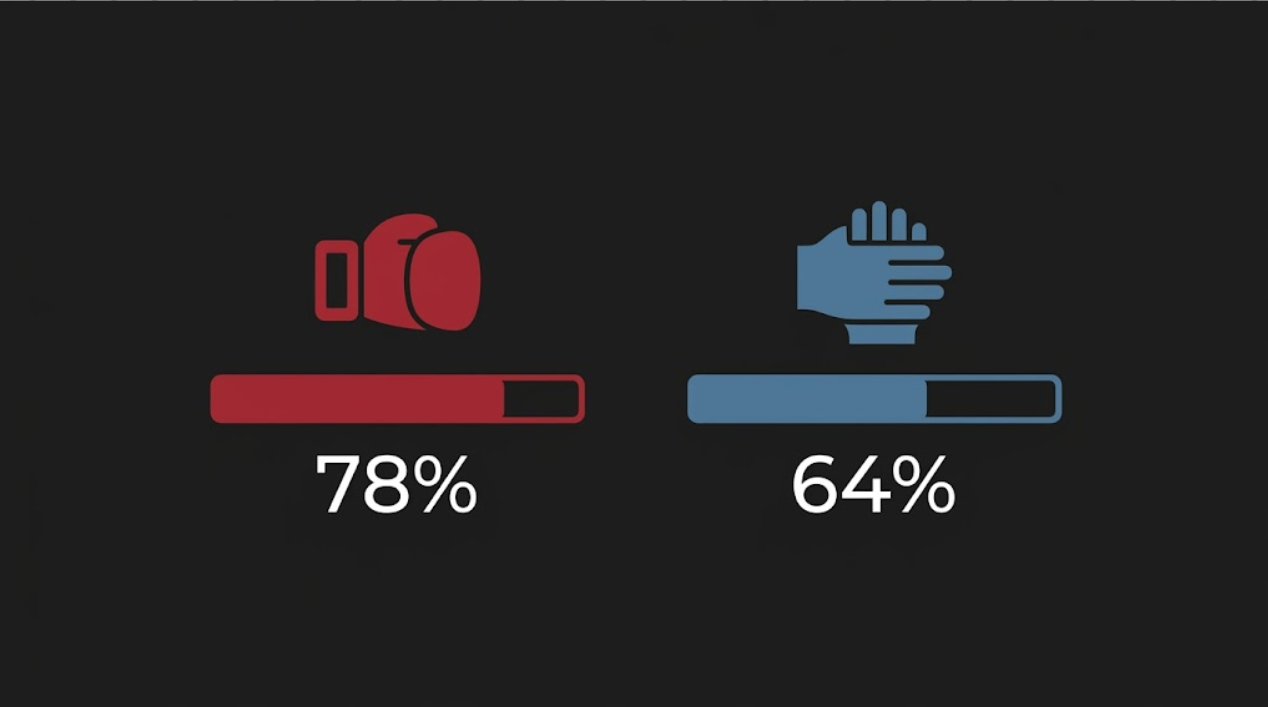
MMA fighters get hurt more often, mostly cuts, joint strain, and minor injuries from the wider range of strikes and grappling. Boxers get hurt less often, but when they do, it tends to be more serious, and repeated head trauma is the bigger long-term concern. Part of the reason comes down to the rules themselves: boxing's 10-count and 3-knockdown rules allow a fighter to keep absorbing blows to the head across a match, while MMA's referees are quicker to stop a fight the moment a fighter can't intelligently defend themselves.
Boxing's association with chronic traumatic encephalopathy, a degenerative brain condition linked to repeated head impacts, is also well documented, the first case Boston University's CTE Center ever identified came from a boxer's brain. MMA's more varied strike patterns and faster stoppages appear to reduce the volume of repeated head trauma compared to boxing, though both sports carry real risk and neither is what most people would call safe.
Boxing vs MMA: Which Is Harder to Learn
This is a genuinely different question from safety, and the general consensus among coaches and practitioners in both sports leans toward MMA being harder to learn, though boxing is far from easy to master.
Boxing: built around a small number of core techniques, jab, cross, hook, uppercut, footwork, and head movement. The technique list is short, but real mastery of that short list takes years.
MMA: requires competence across striking, wrestling, and grappling simultaneously, plus the ability to transition between all three mid-fight. The learning curve is steeper simply because there's more to learn before you're genuinely competent.
Experienced fighters who've crossed over between the two often describe boxing as demanding in its own right, but MMA as harder overall, mainly because of how many different skill sets have to come together at once rather than any single discipline being more physically demanding.
Boxing vs MMA: Which Is Better for Fitness
Both are genuinely excellent conditioning tools, but they train your body somewhat differently. Boxing builds explosive power, hand speed, footwork, and serious cardiovascular endurance, particularly through pad work and sparring rounds. MMA adds a full-body strength and mobility component on top of that, since grappling and takedowns engage muscle groups boxing rarely touches, your entire posterior chain, grip strength, and core stability in ways pure striking doesn't.
If your goal is fitness rather than competition, either will get you into serious shape. MMA training sessions tend to be more physically varied, while boxing sessions tend to be more focused and repeatable, which some people find easier to stay consistent with long-term.
Which Should You Actually Train
The right choice depends less on which sport is objectively tougher and more on what you're actually training for.
For general fitness and stress relief: either works well, pick based on which style of training you'll actually enjoy showing up for.
For a shorter learning curve with a clear skill progression: boxing's smaller technique set makes early progress feel more tangible.
For well-rounded self-defense: MMA's combination of striking and grappling covers more real-world scenarios than striking alone.
If you're relatively new to combat sports generally: many gyms will suggest starting with boxing fundamentals before layering in grappling, since striking basics transfer well into MMA later.
Conclusion
Boxing versus MMA isn't a contest with one clear winner, it splits into which is more dangerous and which is harder to learn, and the data points in different directions for each. MMA fighters get hurt more often but generally less severely, boxers get hurt less often but face a higher risk of serious, cumulative head trauma. MMA takes longer to become genuinely competent at simply because there's more to learn. Neither answer tells you which one you should train, that comes down to your own goals, whether that's fitness, competition, self-defense, or just finding a sport you'll actually stick with.


